Your home loses more energy through windows than almost anywhere else. According to the U.S. Department of Energy, windows account for 25 to 30% of residential heating and cooling loss. Custom window shades for energy efficiency in homes give you a practical, affordable way to fight back.
Introduction
Custom window shades for energy efficiency in homes have moved well beyond simple light control. Today, they serve as a genuine thermal barrier, reducing the load on your HVAC system through every season.
Standard store-bought shades leave edge gaps that bleed conditioned air. Custom shades, measured to your exact window dimensions, eliminate those gaps from the start. That precision makes a real difference on your energy bill.
Getting the right fit, material, and style for your climate is the key to making these projects pay off. The options available in 2026 are better than ever, and the team at your local Rocky’s Ace Hardware can help you sort through them quickly and safely.
What Custom Energy-Efficient Window Shades Actually Are
Custom energy-efficient window shades are window treatments built to your exact window size, style, and function, not cut down from a standard roll. That precision fit is what makes them energy-efficient: it eliminates the energy-wasting edge gaps that off-the-shelf products leave behind, keeping conditioned air where it belongs.
The market reflects strong demand. About 10 million custom shades are ordered annually in the United States, and roughly 40% of new residential builds come pre-fitted with custom shades. Key features that define energy-efficient custom shades include:
- Exact-fit sizing: Measured to your window opening to prevent air infiltration at the edges
- Opacity options: From sheer solar fabrics to blackout liners, matched to room function
- Material selection: Chosen for your specific climate and sun exposure
- Cell construction: Single, double, or triple-cell honeycomb structures for added insulation
- Motorization: Automated operation for consistent positioning throughout the day
How Window Shades Affect Home Energy Efficiency
Window shades affect home energy efficiency by interrupting the transfer of heat between your window glass and your living space. That single function influences both heating and cooling costs year-round. The right shade, used correctly, reduces the workload on your HVAC system in every season.
Interior Window Treatments
Interior shades create a still-air buffer between the glass and your room. About 76% of sunlight that hits standard double-pane windows enters as heat, adding directly to your cooling load. Cellular and insulating shades trap air in their cells, slowing that heat transfer in both directions.
The challenge is consistency. 75% of residential window coverings stay in the same position all day, which sharply limits their effectiveness. Adjusting shades with the sun’s movement, or using motorized shades that do it automatically, makes the biggest difference.
Exterior Window Treatments
Exterior treatments stop solar heat before it ever reaches the glass. Window awnings, for example, reduce solar heat gain by up to 65% on south-facing windows and 77% on west-facing windows, according to DOE data.
Layering exterior and interior treatments gives you the strongest results. An exterior solar screen blocks the bulk of incoming radiation, while an interior cellular shade handles the remaining heat transfer and provides insulation at night.
Which Shade Styles Perform Best for Energy Savings
Cellular honeycomb shades perform best for energy savings among all shade styles. They can reduce heat loss through windows by 40% or more in winter and cut solar heat gain by up to 80% in summer, per U.S. DOE data, making them the clear leader for thermal performance.
Evaluate Thermal Insulation Options
R-value is the clearest way to compare insulating performance across shade types. Here is how cellular shades break down by cell count, according to Axent Shutters:
- Single-cell shades: R-2.0 to R-3.0, a solid upgrade over bare glass
- Double-cell shades: R-3.0 to R-5.0, roughly doubling a standard double-pane window’s insulation
- Triple-cell shades: R-4.0 to R-7.0+, the highest-performing soft window covering available
An Oak Ridge National Laboratory field study confirmed that cellular shades achieved up to 24% heating energy savings compared to generic Venetian blinds. Solar shades are another strong option, blocking up to 99% of UV rays while cutting overall energy consumption by 10 to 25%. A 5% openness solar shade on south-facing windows can reduce cooling costs for those rooms by 15 to 20% during peak summer months.
Choosing the Right Materials for Your Climate
Choosing the right materials for your climate is the single most important factor in how well your shades perform in your specific region. Picking the wrong fabric means leaving real savings on the table, regardless of how well the shades fit or how they are operated through the year.
Select High-Performance Materials
A practical climate guide for material selection:
- Hot climates: Reflective, light-colored materials that can reduce solar heat gain by up to 45% compared to darker fabrics
- Cold climates: Dense, insulating fabrics that retain interior warmth and pair well with high R-value cell construction
- Humid regions: PVC-coated fiberglass, which offers exceptional dimensional stability and resists mold in high-moisture environments
- Moderate climates: Woven wood shades in bamboo, jute, or reeds, which are rising as eco-friendly options with natural insulating properties
The fabric segment held a 43.67% global market share in 2025, reflecting fabric’s versatility across all climate types.
Prevent Drafts and Air Leaks
Even the best shade fabric loses effectiveness if air moves freely around the edges. For heating-dominated climates, choose shades with a low U-value (high R-value). For cooling-dominated climates, prioritize a low solar heat gain coefficient (SHGC), as recommended by PNNL’s Building America Solution Center.
Side channels and snug top-down mounting make it easier to seal the edges. A properly fitted custom shade with side tracks can dramatically reduce the cold-air drafts that make rooms feel uncomfortable even when the thermostat reads correctly.
Seasonal Heating and Cooling Strategy for US Homes
A seasonal heating and cooling strategy for your shades multiplies their energy-saving impact beyond what any single product upgrade can deliver. The right open-and-close routine, matched to the season, is one of the simplest projects a homeowner can tackle and costs nothing once the shades are installed.
Key strategies by season:
- Winter days: Open shades on sun-facing windows to allow solar heat gain; close them at night to retain warmth
- Winter nights: Closed cellular shades cut HVAC energy by roughly 14% during the heating period compared to no coverings
- Summer days: Close shades during peak sun hours to block heat before it enters
- Summer nights: Open shades when outdoor temperatures drop below indoor levels to flush heat naturally
- Motorized scheduling: Smart shades with automated scheduling deliver 5 to 10% more savings than manual operation of the same shade
Emerging Styles That Save Energy in 2026
Several emerging shade styles in 2026 deliver meaningful energy benefits alongside modern aesthetics, making this a strong moment to upgrade. The window shade market is evolving fast, and the newest options combine improved thermal performance with designs that suit a wide range of interior styles.
Top energy-saving styles to know this year:
- Smart motorized shades: The automated window shades market is projected to grow from $3.27 billion in 2025 to $3.58 billion in 2026, driven by energy management demand
- Dual-layer (zebra) shades: Alternating sheer and opaque bands let homeowners optimize solar gain control without fully blocking views
- Bamboo Roman shades: Surged with a +42.31% month-over-month search increase in April 2025, reflecting growing interest in naturally insulating, eco-friendly materials
- No-drill motorized shades: The fastest-growing sub-category in 2026, ideal for renters and DIY projects
- AI-powered shades: Manufacturers like Somfy now offer shades that learn user preferences and adjust automatically for personalized energy management
Keep Costs Down: Savings and Incentives for US Homeowners
US homeowners can keep costs down because the right shades pay for themselves within a predictable timeframe. A full set of double-cell honeycomb shades for a typical home (8 to 12 windows) runs $700 to $1,400 and typically pays for itself within 2 to 3 years through energy savings.
Key savings opportunities for US homeowners:
- Per-window savings: Energy-efficient window coverings can save $25 to $150 per window annually, with cellular shades at the top end
- Federal 25C Tax Credit: Expired December 31, 2025, but homeowners who installed qualifying shades in 2025 can still claim 30% of product cost (up to $1,200) on their 2025 tax return
- Utility rebates: Xcel Energy (Colorado) offers $1.33 per square foot for AERC-rated cellular shades; Austin Energy (Texas) offers $2.20 to $2.75 per sq ft for qualifying solar screens
- AERC certification: Shades must be listed by the Attachments Energy Rating Council to qualify for most rebate programs
- DSIRE database: For 2026 projects, search the Database of State Incentives for Renewables and Efficiency to find current state and utility rebates in your area
Conclusion
Custom window shades for energy efficiency in homes represent one of the most practical upgrades a homeowner can make. They address a significant source of energy loss, work in every climate, and pay back their cost through lower utility bills over time.
The best results come from matching the right shade style and material to your specific climate, using them strategically through the seasons, and taking advantage of available rebates. Stop by your local Rocky’s Ace Hardware, where the team is ready to help you find the right tools and make your next home efficiency project easier from start to finish.
Frequently Asked Questions
How much do custom energy-efficient window shades cost in the United States?
Custom energy-efficient shades vary widely by style and material. A full set of double-cell honeycomb shades for a typical home runs $700 to $1,400 installed. Individual cellular shades save $50 to $150 per window annually, meaning most installations recover their cost within a few years. Utility rebates from programs like Xcel Energy and Austin Energy can further offset the upfront investment.
Are there state or utility rebate programs for window shades in the United States?
Yes, several US utility programs offer rebates for AERC-certified shades. Xcel Energy (Colorado) pays $1.33 per square foot, Austin Energy (Texas) offers $2.20 to $2.75 per square foot, and Salt River Project (Arizona) provides $1.00 per square foot for qualifying solar screens. Minnesota became the first state to include cellular window shades in its Technical Reference Manual for energy conservation programs, validating shades as measurable efficiency upgrades.
What R-value should I look for in an energy-efficient window shade?
R-value measures resistance to heat flow, and higher is better for insulation. A standard double-pane window sits at approximately R-2. A double-cell cellular shade (R-3 to R-5) can effectively double that window assembly’s insulation. Triple-cell shades reach R-4 to R-7+, making them the strongest soft window covering option for cold-climate homes where heating costs dominate.
How do custom shades compare to standard off-the-shelf window treatments for energy savings?
Custom shades outperform standard sizes primarily because of fit. Off-the-shelf treatments leave edge gaps that allow conditioned air to escape and outside air to infiltrate. Custom shades eliminate those gaps. Combined with high-performance materials, a properly fitted custom cellular shade can reduce heat loss by 40% or more in winter, a result that generic store-cut shades rarely achieve.
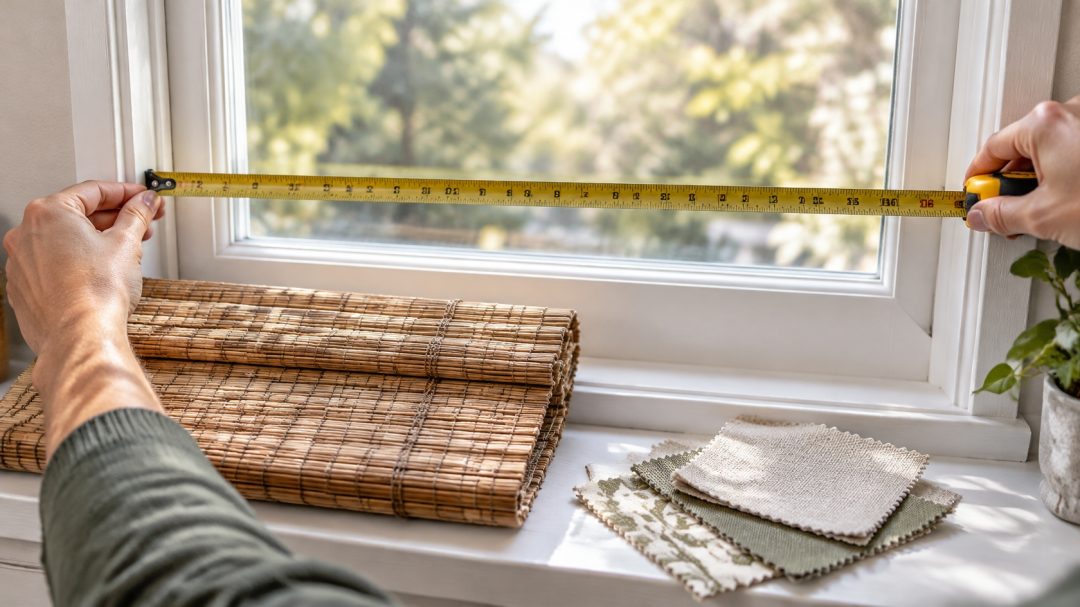
How do I get started installing custom energy-efficient shades in my home?
Start by measuring each window opening precisely, including width and height at multiple points, since windows are rarely perfectly square. Next, choose your shade style based on climate: cellular shades for insulation, solar shades for heat rejection. Look for AERC-certified products to qualify for utility rebates. Over 65% of new home builds in 2026 include automated window coverings, so motorized options are worth considering for easier daily operation.