Getting a spare key made is one of those simple projects that saves you a lot of frustration later. Losing your only house key, or getting locked out, can turn a normal day into an expensive problem fast. Knowing how key duplication works helps you plan ahead and stay prepared.
Introduction
Key duplication is a practical service most hardware stores offer right at the counter or through a self-service kiosk. The process is quick, affordable and straightforward for most common key types. But not every key can be copied in-store, and understanding the difference helps you avoid wasted trips.
The right tools and the right knowledge make the whole process simple. Standard house keys, padlock keys and basic car keys are easy to duplicate. Others, like transponder keys and high-security restricted keys, require specialized equipment that goes beyond what a typical hardware store carries.
How In-Store Key Duplication Actually Works
In-store key duplication works by placing your original key and a matching blank into a cutting machine that traces the original’s grooves and reproduces them on the new key. Whether you visit a staffed counter or use a self-service kiosk, the process follows a reliable sequence that produces a working copy quickly and safely. Modern duplication is faster and more accurate than most people expect.
Selecting the Right Key Blank
The first step is matching your original key to the correct blank. Key blanks are uncut metal pieces shaped to fit a specific lock manufacturer and keyway profile. Staff or kiosk software identifies the right blank by reading the key’s brand markings and profile shape.
Getting this match right is critical. An incorrect blank produces a key that won’t turn, even if the cuts look similar. At Rocky’s Ace Hardware, knowledgeable staff can help identify the right blank when the markings are worn or unclear.
The Cutting and Tracing Process
Once the blank is selected, the machine traces the original key’s cut pattern and reproduces it on the blank. Modern key-cutting machines achieve accuracy rates above 95% for standard keys, according to Lowcountry Ace Hardware. The average duplication process takes five minutes or less from start to finish.
Advanced kiosks use computer vision and machine learning to scan the key, compensate for wear and recreate factory-accurate cuts, according to Kiosk Marketplace. This means even a slightly worn original can produce a clean, accurate copy.
Self-Service Kiosks vs. Staff-Operated Machines
Both options get the job done, but they work differently. Self-service kiosks walk you through each step on a touchscreen. Staff-operated machines rely on a team member’s expertise to select the blank and run the cut.
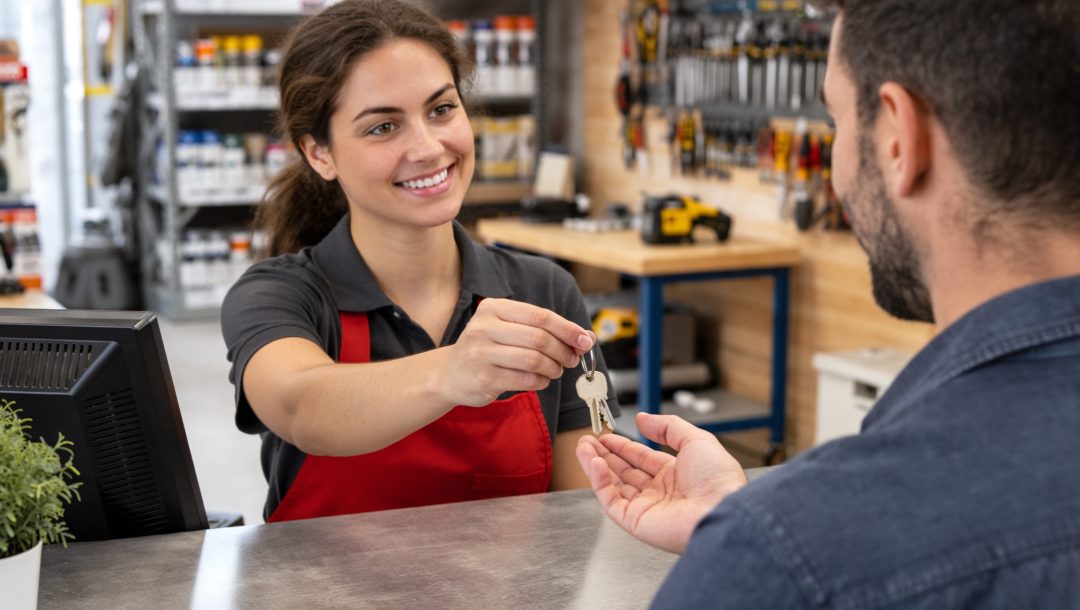
Kiosks are convenient for simple house and padlock keys. Staff assistance is more helpful when your key is unusual, worn or has markings that are hard to read. For any project where accuracy matters most, talking to someone at the counter is always a smart move.
Key Types You Can Copy at Any Hardware Store
Most everyday residential and basic automotive keys can be copied at any hardware store, because these retailers stock a wide range of blanks designed to handle the most common needs. Most everyday keys are straightforward to duplicate, and staff or self-service kiosks can complete the process quickly and safely.
Standard House and Door Keys
Standard house keys are the most common duplication request. These include single-sided and double-sided residential keys used for deadbolts, doorknobs and entry locks. Duplication costs between $2 and $6 at most hardware stores, according to Lowcountry Ace Hardware, and the process takes just a few minutes.
Basic metal car keys without electronic components also fall into this category. These older-style automotive keys run $10 to $50 to duplicate. They’re cut the same way as house keys and don’t require any programming.
Padlock, Cabinet, and Specialty Keys
Padlock keys, filing cabinet keys and mailbox keys are also easy to copy in-store. These tend to be small, simple cuts that most key-cutting machines handle without difficulty.
Specialty keys for luggage locks, gym lockers and storage units usually fall into this group as well. The key is having the original on hand. Machines trace the original’s profile directly, so a clean, undamaged original always produces the best copy.
Keys That Cannot Be Copied In-Store
Certain keys cannot be copied in-store because they require specialized equipment, manufacturer authorization, or electronic programming that goes beyond standard hardware store capabilities. Knowing which keys fall into this category saves you time and helps you find the right solution before making an unnecessary trip.
High-Security and Patented Keyways
High-security keys use patented keyway designs that restrict where blanks can be purchased and cut. The blank itself is only available through licensed dealers, which means a standard hardware store simply can’t source the right starting material.
Copying a patented or restricted key without authorization can carry a penalty of up to $10,000 under U.S. law, according to Acme Locksmith. Brands like Medeco and Mul-T-Lock fall into this category. If you need a copy, contact the original lock manufacturer or an authorized dealer directly.
Transponder and Smart Keys
Transponder keys contain a small chip that communicates with your vehicle’s ignition system. Cutting the physical key is only part of the job. The chip also needs to be programmed to match your specific vehicle, which requires dealer-level or specialist equipment.
Transponder key replacement averages $200 to $250, and smart keys average around $320, according to River City Lock and Key. By 2025, approximately 28% of locksmith service calls involved electronic or smart lock hardware, up from 11% in 2019, reflecting how common these more complex keys have become.
Do Not Duplicate Keys: What the Stamp Actually Means
The “Do Not Duplicate” stamp on a key is not a legal restriction. In most of the United States, that stamp carries no legal enforcement weight at all. It is a courtesy request, not a binding rule, so most hardware stores and kiosks will still copy the key if it is otherwise a standard duplicable type.
“Do Not Duplicate keys are not effective security. They are deceptive because they provide a false sense of security.” – Acme Locksmith
There are no federal laws that enforce the verbiage, and most hardware stores and kiosks will copy a Do Not Duplicate key without hesitation.
California is the one meaningful exception. Under Business and Professions Code Section 6980.54, licensed locksmiths in California cannot duplicate a DND key unless it includes the originator’s company name and phone number and the customer presents a written Letter of Authorization, according to Medeco.
If you genuinely need copy-proof key protection, the right tools are patented keyway systems and restricted key blanks, not a stamp. These provide real mechanical protection rather than a printed warning.
What to Bring and What to Expect at the Store
Bringing the right items to the store makes the whole key duplication process faster and avoids unnecessary delays. You should arrive with your original key in good condition, a valid form of identification if you are copying a restricted blank, and a clear idea of how many copies you need.
- The original key: Always bring the original, not a copy of a copy. Machines trace the original’s exact profile, and second-generation copies lose accuracy.
- Valid ID if requested: Some stores ask for ID when duplicating keys marked with restrictions.
- Your vehicle information: For basic car key duplication, knowing your make, model and year helps staff confirm compatibility.
- A few minutes: Standard house key duplication costs between $2.49 and $5 and takes five minutes or less, according to Lowcountry Ace Hardware.
Hardware store key duplication can also save customers up to 60% compared to dealership pricing for basic automotive keys, according to Lowcountry Ace Hardware. Compare that to emergency lockout services, which average $150 to $300. Stopping by your local Rocky’s Ace Hardware is a quick, affordable way to get a spare made before you ever need it.
Conclusion
Key duplication is one of those practical projects that’s easy to put off until it becomes urgent. Getting a spare made while you have the original in hand is always simpler and less expensive than dealing with a lockout later.
Standard house keys, padlock keys and basic car keys are quick and affordable to copy at your local Rocky’s Ace Hardware. High-security, transponder and smart keys require specialized services, but knowing that ahead of time helps you find the right solution without wasted effort.
Frequently Asked Questions
How much does key duplication cost in the United States?
Standard house key duplication averaged $4.45 in 2024, with double-cut keys averaging $7.00, according to Rocky’s Ace Hardware. Transponder keys run $200 to $250 and smart keys around $320, both requiring dealer or specialist programming. Emergency lockout services average $150 to $300, which makes getting a spare key made in advance one of the most cost-effective home projects you can tackle.
Where can I get a key duplicated in the United States?
Key duplication is widely available across the United States at hardware stores, grocery stores and standalone kiosks. The global locksmith services market was valued at $14.8 billion in 2025, with North America holding a 34.2% revenue share, according to Market Intelo. Rocky’s Ace Hardware locations offer staffed key cutting services, giving you the added benefit of knowledgeable help when your key is unusual or worn.
Can a hardware store duplicate any type of key?
Hardware stores handle most standard residential and basic automotive keys reliably. Advanced encrypted key fobs achieve only a 45% to 99% success rate depending on equipment and expertise, according to Lowcountry Ace Hardware, and many encrypted automotive keys cannot be duplicated at a standard hardware store at all. Patented high-security keys also require authorized dealers rather than standard key-cutting machines.
How does in-store key duplication compare to a locksmith?
Hardware stores are faster and more affordable for standard keys, while locksmiths handle the more complex work. Key duplication represents 22.4% of the overall locksmith services market by application, according to DataIntelo, reflecting how much of the everyday duplication volume flows through retail locations. For transponder programming, restricted keyways or emergency services, a licensed locksmith or dealership is the right call.
What do I need to bring to get a key duplicated at a hardware store?
Bring the original key, not a copy of a previous copy. Second-generation copies lose accuracy because machines trace the profile directly. For basic automotive keys, knowing your vehicle’s make, model and year helps confirm compatibility. More than 85% of locksmith shops across North America have upgraded with programmable machines and key cloning devices, according to River City Lock and Key, so most standard requests are handled quickly and without hassle.