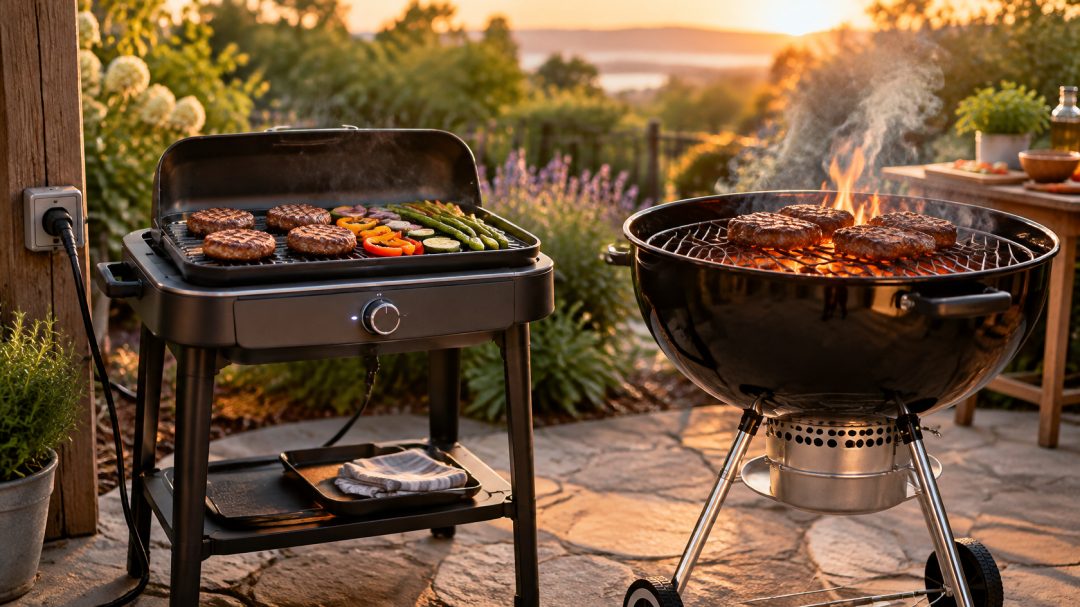
Choosing between electric grills vs traditional grills is one of the most common questions serious grillers face today. With grill ownership at record highs across the United States, the stakes are real. Getting this decision right means better food, fewer headaches, and a setup that actually fits your life.
Introduction
The grill market has never been more varied. Gas, charcoal, pellet, and electric options all compete for space on patios, balconies, and backyards. Each type brings genuine strengths, and each comes with real trade-offs worth understanding before you spend a dollar.
Electric grills have grown fast, driven by apartment living, fire code restrictions, and a new generation of buyers who want convenience without sacrificing results. Traditional grills, meanwhile, still dominate for good reason: raw heat, smoky flavor, and a cooking experience that many grillers love.
The right choice depends on where you live, what you cook, and how often you fire up the grill. Knowing the facts makes that decision much easier.
Electric and Traditional Grills: A Quick Overview
Electric and traditional grills serve different needs, and both have a strong foothold in the U.S. market. According to HPBA, 80% of U.S. homeowners own a grill or smoker, representing 76 million grill-owning households in North America. Each grill type fills a different role.
- Gas grills: Hold 47.88% of the market per Fortune Business Insights, prized for quick heat and easy temperature control
- Charcoal grills: Hold 24.8% market share, favored for high heat and classic smoky flavor
- Pellet grills: A fast-growing category at 18.7% share, combining wood-fire taste with digital temperature control
- Electric grills: A fast-growing segment valued at USD $4.81 billion in 2025, driven by urbanization and fire-code restrictions on open flames
Heat Source and Cooking Performance Compared
The heat source a grill uses determines its preheat time, searing ability, temperature control, and the food it handles best. How a grill generates heat shapes everything about cooking performance. Each fuel type performs differently, and the gaps matter more than most buyers expect.
Here is a quick breakdown of peak temperatures by type:
- Charcoal: Can exceed 700°F to 1,200°F at grate level, ideal for high-heat searing
- Gas: Typically tops out at 500°F to 600°F, with instant adjustment across a wide range
- Electric: Premium models reach 400°F to 600°F, with precise, consistent surface temperatures
Flavor: Does Electric Match Gas or Charcoal?
Flavor is the biggest gap between electric and traditional grills. Charcoal and wood produce smoke compounds that create the classic BBQ taste. Electric grills cannot replicate that. No flame means no smoke, and no smoke means a different flavor profile.
That said, electric grills are not flavorless. They deliver clean, direct heat that browns food well. The Weber® Lumin, a flagship electric model carried at Rocky’s Ace Hardware, reaches 600°F+ and won the Red Dot Design Award in 2024, with testers finding each burger cooked across its surface ended up within 10°F of the others, per SmokedBBQSource. Consistent heat means consistent results.
What You Plan to Cook Matters
Gas grills shine for delicate proteins like fish and vegetables, offering instant heat adjustment across 200°F to 600°F+ with a 5 to 10 minute preheat, per BBQ Experience. Charcoal is the go-to for steaks and anything that benefits from extreme searing heat.
Electric grills handle everyday grilling well: burgers, chicken, vegetables, and fish. An 1,800W electric contact grill reaches 350°F in just 6 minutes, compared to 18 minutes for lump charcoal and 22 minutes for briquettes, per StarterKing. If speed and convenience matter most, electric wins that race.
Cost and Energy Efficiency: What You Actually Pay
What you actually pay for a grill goes well beyond the purchase price, because fuel costs add up significantly over a full grilling season. Upfront price is only part of the story, and the differences between grill types are large enough to affect your total annual spending in a meaningful way.
Here is what you can expect to pay per cookout by fuel type, per GrillingDude.com:
- Electric: Approximately $0.07 to $0.20 per cookout at 2026 national average electricity rates
- Propane: Averages $0.60 to $1.50 per cook based on a standard tank refill
- Charcoal briquettes: Costs $3 to $7 per session, as a typical bag lasts only about 3 sessions
- Premium lump charcoal: Can cost $625 to $935 per year for frequent grillers
Long-Term Value: Which Costs Less Over Time?
Annual fuel costs tell the clearest story. Electric grills cost just $5 to $16 per year in electricity. Propane runs $80 to $120 annually. Natural gas (piped) is the cheapest traditional option at $50 to $105 per year, per RunWatts.com.
Electric grills also convert approximately 75% of their energy into heat, compared to roughly 55% for gas grills, according to CurrentBackyard. That efficiency gap means you get more cooking power per dollar spent on fuel. For grillers who cook frequently, the savings compound quickly.
Health, Safety, and Environmental Impact
Electric grills carry meaningfully lower health and environmental risks than traditional grills, which produce compounds with real consequences for both people and the environment. Understanding those differences helps you weigh more than just cooking performance when choosing between grill types.
Key findings from recent peer-reviewed research:
- PAH carcinogens: A study measured PAH concentrations at 382,020 ng/m3 over charcoal briquettes versus only 1,442 ng/m3 over a gas grill, a roughly 265x difference, per MDPI Applied Sciences
- PAH in grilled meat: Electric grills produced the lowest total PAH levels at 18.41 µg/kg, compared to charcoal at 34.56 µg/kg, per Nature Scientific Reports
- Carbon footprint: Charcoal grilling produces a carbon footprint of 998 kg CO2e, almost three times that of LPG grilling at 349 kg CO2e, per ResearchGate
- Electric emissions: Electric grills produce zero direct emissions at point of use, with U.S. grid carbon intensity falling to approximately 384 grams of CO2/kWh by 2024
Electric Grills: Strengths and Drawbacks
Electric grills offer genuine advantages in convenience, safety, and indoor usability, but they also come with real limitations around flavor and heat output. Understanding where they excel and where they fall short helps you decide if one fits your projects and cooking style.
Strengths worth knowing:
- Fire code compliance: Electric grills are the only grill type explicitly permitted on most apartment balconies, exempt from IFC open-flame restrictions, per TorchGuys
- Preheat speed: Ready in 5 to 10 minutes, versus 15 to 30 minutes for charcoal
- Temperature consistency: Independent testing found electric models show only a 12°F average surface-temperature variation, versus 76°F for gas units, per UrbanManCaves
- User preference: About 68% of users prefer electric grill models with programmable settings, per ZSQeelin
The main drawback remains flavor. Electric grills cannot produce the smoke compounds that define traditional BBQ taste. Opening the lid on a premium electric model can also cause a temperature drop of nearly 200°F, with roughly 5 minutes needed to recover, per Reviewed.com.
Space, Setup, and Where You Live
Where you live may settle the electric versus traditional grill decision before anything else does, because fire codes across the United States restrict or ban open-flame grills in many residential settings. Space constraints and local regulations often matter more than personal cooking preferences.
Key rules and space considerations:
- IFC open-flame ban: The International Fire Code prohibits charcoal and open-flame cooking devices on combustible balconies or within 10 feet of combustible construction, covering most apartment buildings and condos, per LegalClarity
- Propane storage restrictions: Many fire codes prohibit storing propane containers larger than one pound on balconies, effectively banning standard propane grills from most private outdoor residential spaces, per PyeBarker Fire Safety
- Compact footprint: The Weber® Lumin measures just 12″H x 26″W x 19″D and weighs 36.5 lbs, offering 242 sq. in. of cooking area, enough for a family of 3 to 4, per Weber®
- Portable demand: Approximately 28% of new grill purchases involve portable models designed for balconies, camping, and recreational use, per Fact.MR
Maintenance: How Much Time Will You Spend?
Electric grills are easier to maintain than traditional options. There are no burner tubes to clear, no ash to remove, and no grease traps buried under charcoal residue. Most electric grill grates are removable and dishwasher-safe, making cleanup quick.
Gas grills require regular burner inspection, grease management, and occasional deep cleaning to prevent flare-ups. Charcoal grills demand the most attention: ash disposal after every cook, grate scrubbing, and vent cleaning to maintain airflow. If you want to spend more time cooking and less time cleaning, electric grills make it easier.
How to Choose the Right Grill for Your Situation
The right grill is the one that matches your living situation, cooking habits, and budget, because no single type wins for everyone. A few clear patterns help narrow the choice, and working through your specific circumstances makes the decision straightforward in most cases.
Start with these questions:
- Where do you live? Apartment or condo dwellers with balcony restrictions should look at electric grills first
- What do you cook? Steak lovers who want extreme searing heat will prefer charcoal; everyday grillers will find electric or gas more practical
- How often do you grill? Frequent grillers benefit most from low fuel costs and fast preheat times
- How much space do you have? Compact electric models fit spaces where full-size gas grills simply cannot
Your Budget and Cooking Frequency
Budget shapes the decision at every level. According to OpenBrand, products priced $200 to $399 command the largest share of unit sales at 42%, making that range the sweet spot for most buyers. Top purchase drivers are price (36%) and quality (35%).
Frequent grillers who cook several times a week will recover the cost of a quality electric grill quickly through lower fuel costs. Occasional grillers may find a mid-range gas or charcoal grill fits their needs without the upfront investment. The team at Rocky’s Ace Hardware can help you match the right tools to your cooking frequency and space before you commit.
Conclusion
Electric and traditional grills each bring real strengths to the table. Electric models offer speed, precision, lower fuel costs, and the ability to grill in spaces where open flames are not allowed. Gas and charcoal grills deliver higher peak heat, classic smoky flavor, and a cooking experience that many grillers prefer for certain foods.
The best grill is the one that fits your space, your cooking style, and your budget. Stop by your local Rocky’s Ace Hardware location and talk with the team. They’ll help you find the right tools to make every cookout easier and more enjoyable, whether you’re a first-time buyer or upgrading your setup.
Frequently Asked Questions
How much does it cost to run an electric grill in the United States?
Running a typical electric grill costs very little compared to other fuel types. Weber® has found it costs only about 10 to 14 cents to run one of its electric grills for a full 45-minute cooking session, making electric 4 to 5 times cheaper per session than propane and up to 10 times cheaper than charcoal, per OAsthar. Annual electricity costs for most electric grill owners stay well under $20.
Are electric grills legal on apartment balconies in the United States?
In most U.S. municipalities, electric grills are the only grill type explicitly permitted on apartment balconies. They produce no open flame and are exempt from IFC open-flame restrictions. In New York City specifically, electric grills face the fewest location restrictions and are legal on balconies and rooftops where gas and charcoal grills are prohibited, per Avenue Law Firm. Always check your local building rules before purchasing.
Do electric grills produce the same flavor as charcoal or gas?
Electric grills do not replicate the smoky flavor that burning wood or charcoal creates. That gap is real and worth knowing before you buy. However, a 2024 NielsenIQ analysis found that 49% of future grilling device purchases by current gas or charcoal owners are likely to be something other than a like-for-like replacement, with electric models gaining significant consideration for their convenience and consistency.
How do electric grills compare to gas grills for cooking performance?
Electric grills heat up faster and deliver more consistent surface temperatures than gas models. Independent testing found electric units show only a 12°F average surface-temperature variation versus 76°F for gas units, per UrbanManCaves. Gas grills offer a wider BTU range and better suitability for large cuts of meat. For everyday grilling projects involving burgers, chicken, and vegetables, electric grills perform reliably and quickly and safely.
What do I need to set up an electric grill?
Setup is straightforward. Electric grills plug into a standard 120V household outlet and require no propane tanks, charcoal, or special fuel storage. Most models are ready to cook in 5 to 10 minutes. About 32% of grills launched in 2025 featured Wi-Fi or Bluetooth connectivity, per BBQ Authority, meaning many newer electric models can be monitored and adjusted from your phone. No special installation is needed for most residential setups.