
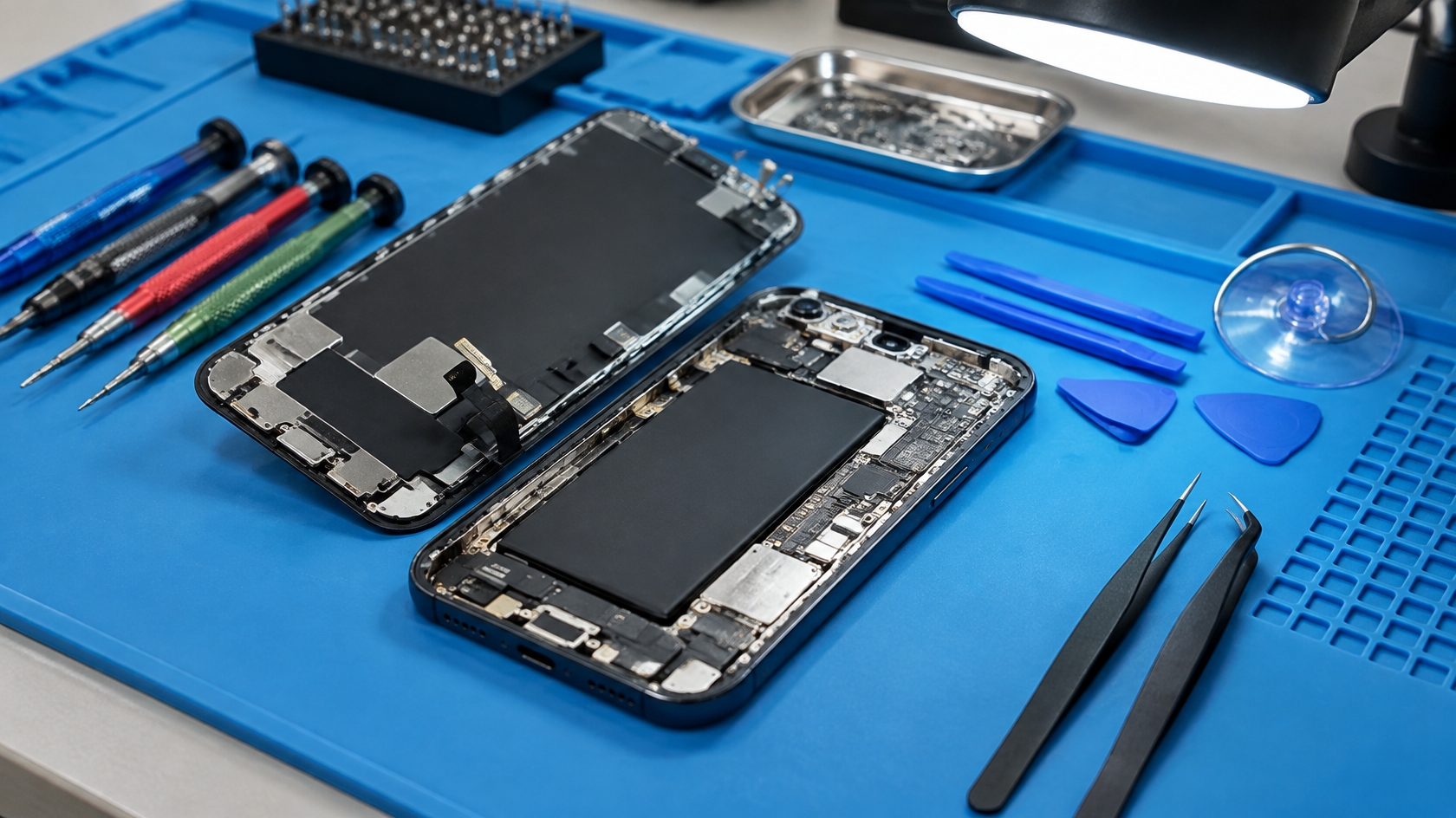
A cracked iPhone screen can stop your day cold. Repair costs range from $29 with coverage to $379 without it, and the gap between providers can be just as wide. Knowing what drives phone screen repair costs helps you make the right call before you hand over your phone or your wallet.
Introduction
iPhone screen repair costs vary more than most people expect. The model you own, the shop you choose, and whether you carry AppleCare+ all push the final number in very different directions.
Getting this wrong is expensive. A repair that looks cheap upfront can cost you more in lost resale value, disabled features, or a voided warranty than the original screen damage ever would have.
Understanding the full picture before you commit to a repair shop means fewer surprises on the bill and a phone that actually works the way it should when you get it back.
iPhone Screen Repair Cost by Model
iPhone screen repair costs range from under $100 for older models to nearly $400 for the latest Pro models, depending on which iPhone you own. Apple’s official out-of-warranty prices span that wide range, with older iPhones sitting at the lower end and newer Pro models pushing repair bills close to $400.
Older Models: iPhone 11 and Earlier
Older iPhones use LCD displays, which cost significantly less to source and replace. According to ecoATM Blog, Apple’s out-of-warranty screen repair for the iPhone SE starts at $129. Third-party shops bring that number down further, with a national average of $130 for phone screen repairs across all models, per Thumbtack. For older models, repair almost always makes financial sense.
Newer Models: iPhone 12 Through iPhone 16
Newer iPhones use OLED displays, and that changes the math fast. Apple charges $279 for an iPhone 16 screen and $379 for an iPhone 16 Pro Max out of warranty, per ecoATM Blog. Third-party shops average $250 to $300 for a Pro Max repair, saving you $79 to $129. With AppleCare+, every screen repair on any model drops to a flat $29, per Talo.com.
What Actually Drives the Price Gap Between Repair Providers
The price gap between repair providers comes down to specific factors: parts quality, technician certification, overhead costs and warranty terms. Two iPhones with identical damage can come back with repair quotes that differ by $200. Understanding those specific reasons helps you evaluate any quote quickly and safely.
OEM vs. Aftermarket Parts
Display technology is the single largest cost driver in any screen repair. According to DIYFixTool, OLED screens cost $50 to $150 more to replace than LCD screens, with flagship OLED panels now costing up to three times more than equivalent LCDs. Third-party screens cost 55% less than OEM parts, but Gitnux reports that 22% of consumers experience quality issues with aftermarket screens. Cheaper parts carry real risk.
Labor, Overhead, and Certification Costs
Independent shops charge 40 to 60% less than Apple for screen repairs, averaging $120 versus $320, according to iMobile Repairs. That gap reflects Apple’s certified technician training, genuine parts sourcing, and retail overhead. Geographic location adds another layer: urban centers like New York and San Francisco see iPhone glass repairs averaging $200 to $300, while smaller towns hover around $150 to $220, per LatestCost.
Apple Store vs. Third-Party Shop: A Real Cost Comparison
Apple and third-party shops differ in price, parts quality and what each option actually guarantees you after the repair. The price difference between Apple and a local shop is real, but so are the trade-offs. Knowing what each option actually delivers makes the comparison useful rather than misleading.
What You Get at Each Price Point
An iPhone 13 screen costs $279 at Apple and averages $120 to $180 at a third-party shop, up to 57% less, per iRepart. Apple Authorized Service Providers such as uBreakiFix offer the same certified repair with genuine parts at prices that don’t always carry the Apple Store premium, according to SimpleMac. The right tools and certified parts matter more than the sign on the door.
Warranty Coverage After Repair
Apple and Apple Authorized Service Providers back screen repairs with a 90-day repair warranty. Non-authorized shops vary widely. A third-party repair can void AppleCare+ for future claims on that same component, per Phonebulance. Non-OEM repairs can also permanently disable Face ID, True Tone calibration, and water resistance. Those are features you won’t get back.
AppleCare+ and Insurance: Do the Numbers Actually Work?
AppleCare+ can save money for many iPhone owners once you run the actual math on repair costs versus coverage fees. It looks like an added expense at first, but for many iPhone owners the numbers favor coverage, especially if screen damage is a realistic risk.
Running the Numbers on AppleCare+
AppleCare+ for iPhone 16 and 17 models now costs $11.99 per month or $119.99 per year, with Pro models at $13.99 per month, after Apple raised prices by 50 cents across all models in February 2025, per MacRumors. A single screen repair on an iPhone 16 Pro Max saves $350 with AppleCare+ ($379 out of warranty versus $29 with coverage), more than covering two years of monthly premiums, according to iDrop News.
“About 50% of smartphone users experience screen damage within the first two years of ownership.” – ecoATM Blog
That statistic makes coverage a sound investment for most people, not just heavy users or the accident-prone.
Hidden Costs Most People Miss After Screen Repair
Hidden costs after a screen repair, including data loss, failed Face ID and voided warranties, can erase the savings from choosing a cheaper shop. The invoice is rarely the full story, and several of these costs only show up after the repair is done, making the final bill higher than expected.
Watch for these hidden expenses:
- Diagnostic fees: Shops charge $40 to $80 just to assess your phone, and many only waive this fee if you proceed with the repair, per Rokform Blog.
- Resale value loss: Aftermarket screens can reduce a phone’s trade-in value by 20 to 40%, often costing more in lost value than the original repair savings, per ecoATM Blog.
- Water resistance: The IP68 rating requires factory-level seals that even authorized shops cannot fully replicate, per MagBak Blog.
- Part pairing: Apple links displays to the phone’s CPU via a unique digital signature. Installing an unpaired screen can disable True Tone and flag the device as a security concern, per iFixit.
- Mail-in shipping: Sending your phone in adds $15 to $30 each way to the total bill.
When Repair Makes Sense (And When It Doesn’t)
Repair makes sense when the cost is under 50% of the device’s current market value, and replacement makes sense when it exceeds 70%, per RepairGeniuses. That simple rule makes most repair decisions easier and keeps you from overspending on a device that is no longer worth the investment.
Here is how to apply that in practice:
- Repair makes sense for recent models. An iPhone 13 screen repair runs $129 to $199, while a refurbished replacement costs $450 to $600, making repair 70 to 80% cheaper, per PhoneProbs.
- Replace when the device is four or more years old. In 2026, an iPhone 11 is approaching the end of Apple’s software support window.
- Replace when battery health is below 80% or multiple components are failing at once. Stacked repair costs add up fast.
- Consider your habits: 73% of consumers prefer repair over replacement to extend device lifespan, per WorldMetrics, but only if the repair cost justifies it.
Red Flags to Watch for When Choosing a Repair Shop
Red flags at a repair shop include refusing to show parts, offering no written warranty and asking for your passcode before diagnosis. Not every repair shop operates honestly, and knowing these warning signs helps you protect both your phone and your personal data before handing anything over.
Watch for these red flags:
- No written warranty: Trustworthy shops offer 90-day or longer written warranties. No warranty means no accountability.
- Pressure to decide immediately: Reputable shops give you time to compare quotes.
- Unauthorized add-ons: According to MobiFirms, 22% of customers discovered additional repairs they never authorized.
- No certification visible: Look for Apple Independent Repair Provider status or CTIA technician credentials before handing over your phone.
- Privacy risks: A University of Guelph study found that 50% of repair technicians accessed personal files from customers’ devices, per Kaspersky Blog. Back up your phone and log out of sensitive accounts before any repair.
- Overcharging patterns: CompareToRepair reports that 41% of users have experienced some form of repair fraud.
Conclusion
Phone screen repair costs for iPhones cover a wide range, and the right choice depends on your model, your coverage, and the shop you trust. Choosing a certified provider with genuine parts protects more than just the screen.
The staff at Rocky’s Ace Hardware are always happy to point you toward the right resources and tools for your projects. Whether you’re protecting your device before damage happens or figuring out your next step after a cracked screen, having a knowledgeable team in your corner makes it easier.
Frequently Asked Questions
How much does iPhone screen repair cost in the United States?
iPhone screen repair costs in the United States range from $29 with AppleCare+ to $379 out of warranty at Apple for a Pro Max model. Independent shops average $96 to $178 nationally, making them 20 to 40% less expensive than Apple’s out-of-warranty pricing. Your total depends on the model, the provider type, and your coverage status.
How common is a cracked iPhone screen in the United States?
Cracked screens are extremely common. About 18% of Americans currently have a cracked screen, rising to 24% among Gen Z, per Secure Data Recovery. Cracked screens represent 58% of all iPhone repairs. The top reason people delay fixing them is cost, cited by 39% of respondents, per Dash Repairs.
Does a third-party screen repair void my iPhone warranty?
Under the Magnuson-Moss Warranty Act, a manufacturer cannot void a warranty simply because a third-party shop performed the repair, per StopToFix. Apple must prove the independent repair directly caused the specific issue being claimed. However, a non-authorized repair can still void AppleCare+ coverage for that specific component going forward.
How does Apple’s repair compare to a third-party shop for quality?
Apple and Apple Authorized Service Providers use genuine parts and certified technicians, which preserves features like Face ID, True Tone, and water resistance. Third-party shops using aftermarket parts cost significantly less but carry real trade-offs. The global smartphone repair market is valued at $20.98 billion in 2025, with third-party providers handling over 60% of all U.S. repairs, per Reed Intelligence.
How long does an iPhone screen repair take?
Professional screen replacement takes 30 to 60 minutes for most newer OLED models. An Apple Store visit averages two to three hours total including check-in time, per HelperTech. Mail-in repairs take five to seven business days. For homeowners who need their phone back quickly and safely, 92% of repair shops now offer same-day service.