Your yard doesn’t stay the same all year, and neither should your supply list. Choosing the wrong tools wastes time and money on every project. The right lawn and garden supplies make seasonal work faster, safer, and more rewarding.
Introduction
Must-have lawn and garden supplies for every season aren’t just about having a full shed. They’re about having the right tools ready when your yard needs them most.
Homeowners who invest in quality gear spend more time enjoying their outdoor spaces and less time struggling with equipment that doesn’t hold up. According to Garden Research, per-household gardening spending reached a record $740 in 2025, reflecting how seriously Americans take their lawns and gardens.
Getting your supply list right from the start saves money over time. A well-chosen set of tools handles spring planting, summer maintenance, fall cleanup, and winter prep without constant replacements or workarounds.
Picking the Right Tools for Your Yard
Picking the right yard tools means matching your equipment to your lot size, soil type, and the projects you tackle most often. Those three factors shape what belongs in your garage. Start by assessing your space honestly, and you will avoid buying tools that sit unused while the ones you actually need stay out of reach.
According to Golf Course Lawn’s 2025 U.S. Lawns Survey, durability and aesthetics each ranked as top purchase considerations for 71% of homeowners, with comfort close behind at 69%. Most buyers already know they want tools that feel good and last. Here is how to narrow it down:
- Lot size: Small yards need hand tools and a basic mower. Larger properties benefit from power equipment and irrigation systems.
- Soil type: Dense clay soil calls for heavier digging tools. Sandy or loamy soil is easier to work with lighter options.
- Seasonal tasks: Match your tool list to your climate. New England yards face hard winters and wet springs that demand specific gear.
- Budget approach: Spend more on tools you use weekly. Save on specialty items you reach for once or twice a year.
Essential Yard Tools Every Homeowner Should Own
Every homeowner should own a core set of yard tools that handles routine maintenance quickly and safely. These are the pieces you will reach for week after week. Building that foundation early saves time, reduces frustration, and keeps your yard in good shape through every season without relying on borrowed or rented equipment.
According to LawnStarter, 65% of U.S. homeowners say weeds are their biggest lawn challenge, which means a solid tool kit isn’t optional. It’s the foundation of a healthy yard.
Lawn Mower and String Trimmer
A lawn mower is the single most essential piece of yard equipment you’ll own. According to Polaris Market Research, the mowers segment held a 35.49% share of the U.S. outdoor power equipment market in 2025, confirming it’s the cornerstone purchase for homeowners.
Pair your mower with a string trimmer to handle edges, fence lines, and tight spots the mower can’t reach. According to the Golf Course Lawn 2025 Survey, 60% of homeowners already own one, making it one of the most widely adopted yard tools.
Rakes: Leaf and Soil
A leaf rake and a soil rake serve very different purposes, and you need both. Leaf rakes gather debris, grass clippings, and fallen leaves without damaging turf. Soil rakes level ground, break up clumps, and prep beds for seed or mulch.
Skipping one of these means improvising with the wrong tool, which slows down every project. Look for fiberglass or steel handles that flex slightly without snapping under load.
Shovels and Soil Knife
A long-handled spade shovel handles digging, edging beds, and moving material. It’s one of those tools that earns its place on every project from planting trees to clearing snow.
A soil knife (sometimes called a hori hori) is a versatile hand tool for transplanting, weeding, and dividing perennials. It’s compact, precise, and far more useful than it looks. Together, these two tools cover most of what your hands and a trowel can’t.
10 Garden Tools Worth Buying Once
Quality garden tools pay for themselves over time. The 2026 National Gardening Survey found that 49.5% of gardeners spent more in 2025 than the year before, with millennials leading at 61.1%, confirming that homeowners are upgrading to durable gear rather than replacing cheap tools repeatedly.
Pruning Tools: Hand Pruner and Lopper
A hand pruner handles stems up to about three-quarters of an inch. It’s the tool you’ll use most often for deadheading, shaping shrubs, and harvesting herbs or vegetables.
A lopper extends your reach and adds leverage for branches up to two inches thick. Buy bypass versions of both rather than anvil-style. Bypass blades make cleaner cuts that heal faster, which keeps your plants healthier through every season.
Hedge Shear and Hand Weeder
A hedge shear keeps shrubs, ornamental grasses, and hedgerows looking sharp. Manual versions work well for smaller plantings. Look for cushioned grips that reduce hand fatigue on longer sessions.
A hand weeder gets roots out cleanly without disturbing surrounding soil. According to LawnStarter, a high-quality pre-emergent like Preen® can reduce seasonal weed pressure by up to 90% when applied correctly. A hand weeder handles what slips through.
Seed Spreader and Cultivator
A seed spreader makes fertilizer and grass seed applications even and efficient. According to the Golf Course Lawn 2025 Survey, 75% of homeowners buy and apply their own lawn care products, making a quality spreader a near-universal need.
A cultivator loosens compacted soil between plants, improves drainage, and mixes in amendments without disturbing roots. It’s a small tool that makes a noticeable difference in how well your garden beds perform each season.
Irrigation Equipment That Saves Water and Time
Irrigation equipment that saves water and time starts with a smart controller. The EPA WaterSense program found that switching to a WaterSense-labeled smart irrigation controller saves an average home nearly 7,600 gallons of water annually, making it one of the highest-return purchases a homeowner can make for the yard.
“Up to 50% of water used outside is wasted due to wind, evaporation, and runoff from inefficient irrigation systems.” – EPA
The right irrigation setup doesn’t have to be complicated. Options that work for most homeowners include:
- Smart irrigation controller: Adjusts watering schedules based on weather and soil conditions, cutting outdoor water use by 30-50%.
- Drip irrigation system: Delivers water directly to roots at up to 90% efficiency, per Utah State University Extension, compared to around 65% for traditional sprinklers.
- Hose and timer combo: A simple, affordable starting point for smaller gardens and container plantings.
- Soaker hose: Ideal for vegetable beds and flower borders where consistent moisture matters most.
Protective Equipment You Should Not Skip
You should not skip protective equipment because yard work carries real risk. The U.S. Consumer Product Safety Commission reports that 230,000 people are treated in emergency rooms every year for lawn and garden tool injuries. That works out to more than 875 injuries every single day, many of which proper protective gear would have prevented.
Protective gear that belongs in every homeowner’s kit includes:
- Work gloves: The single most critical item. Global Growth Insights reports hand protection holds the largest share at 28.5% of the gardening PPE market.
- Safety glasses: Essential when mowing, trimming, or using any power equipment near debris.
- Sturdy closed-toe footwear: Falls account for about 30% of gardening injuries, per Safety Now.
- Hearing protection: Recommended for extended use of gas-powered equipment above 85 decibels.
- Knee pads: Reduce strain during planting, weeding, and edging sessions.
Season-Specific Supplies: What to Add Each Quarter
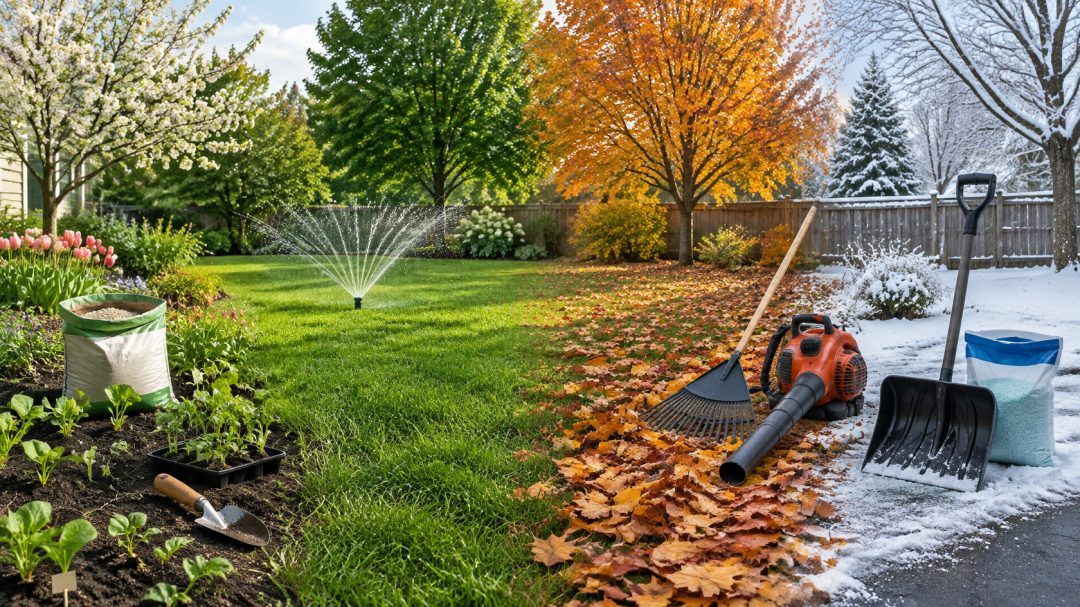
Your supply list should shift each quarter because seasonal timing makes the difference between a healthy lawn and one that struggles to recover. Matching your products and tasks to the calendar gives grass, soil, and plants what they need at the moment they can actually use it, rather than too early or too late.
Per-participant spending on tree care rose 76% and lawn care jumped 31% in 2025, according to the 2026 National Gardening Survey, showing that homeowners are investing more in seasonal routines. Key additions by quarter include:
- Spring: Pre-emergent herbicide like Preen® once soil hits 50-55 degrees Fahrenheit, plus a starter fertilizer like Scotts® Turf Builder after the first mow, per Clemson University Extension.
- Summer: Slow-release nitrogen fertilizer every 4-6 weeks for warm-season grasses, per Missouri Extension. Cool-season grasses should skip summer feeding.
- Fall: Apply 1-1.5 lbs of nitrogen per 1,000 square feet every 4-6 weeks through November for cool-season lawns, per University of Minnesota Extension.
- Winter: Stock up on ice melt, snow shovels, and fuel for snowblowers before the first storm hits.
Power Equipment for Larger Lawns
Larger lawns require power equipment that keeps up with the workload without slowing you down. The U.S. outdoor power equipment market was valued at $22.26 billion in 2025, driven by strong homeowner demand for residential landscaping tools, which reflects how many property owners are investing in equipment built for serious yard maintenance.
Choosing the right power equipment depends on your acreage and how much time you want to spend on each task:
- Riding mower: Best for properties over half an acre. Reduces mowing time significantly compared to walk-behind models.
- Zero-turn mower: Ideal for large lawns with obstacles. Straits Research reports the zero-turn mower market reached $5.59 billion in 2025, with the 50-60 inch cutting width segment holding the largest share.
- Battery-powered tools: Robotic mower shipments rose 22% year-over-year in 2025, per Globe Newswire, and cordless options now hold 28% of the lawn mower market.
- Leaf blower: Owned by 62% of homeowners, per the Golf Course Lawn survey, making it the most common powered yard tool in American garages.
Conclusion
Building the right collection of lawn and garden supplies takes some planning, but it pays off in every season. Quality tools make routine yard work faster and less frustrating, and the right seasonal supplies keep your lawn and garden performing at their best year-round.
Rocky’s Ace Hardware carries a curated selection of tools, power equipment, irrigation supplies, and seasonal products chosen with homeowners in mind. Stop in and talk with the team. They’ll help you find exactly what your yard needs, whether you’re starting fresh or rounding out a collection you’ve built over the years.
Frequently Asked Questions
How much do lawn and garden supplies cost for a full season in the United States?
Seasonal lawn and garden supply costs vary widely depending on lot size and goals. Most U.S. households spent an average of $70-$100 per month on gardening in 2025, according to Speedcalcs. A basic tool kit for a small to mid-sized yard typically runs a few hundred dollars upfront, with ongoing costs for fertilizer, seed, and seasonal supplies adding up over each quarter.
How popular is lawn and garden care among homeowners in the United States?
Lawn and garden care is one of the most common homeowner activities in the United States. According to World Metrics, 82% of suburban U.S. residents own or maintain a lawn, and 55% of U.S. households participate in gardening activities. DIY lawn care accounts for 55% of total U.S. lawn maintenance, meaning most homeowners are hands-on with their own yards.
What is the most efficient irrigation method for a home garden?
Drip irrigation is the most efficient option for most home gardens. It delivers water directly to the root zone at up to 90% efficiency, compared to around 65% for traditional sprinklers, per Utah State University Extension. Homeowners who install smart controllers alongside drip systems typically see a 30-50% reduction in outdoor water use, translating to meaningful savings on monthly utility bills.
Are battery-powered tools a good alternative to gas-powered lawn equipment?
Battery-powered tools are a strong option for most residential properties. The global cordless lawn mower market share grew from 12% in 2020 to an estimated 28% in 2025 and is projected to reach 42% by 2029, per Globe Newswire. Battery runtimes now reach up to 90 minutes per charge, making them practical for most small to mid-sized lawns. They run quieter and require less maintenance than gas alternatives.
How do I get started building a seasonal lawn and garden supply kit?
Start with the tools you’ll use every week: a mower, string trimmer, rake, shovel, and a quality pair of work gloves. According to HIRI, homeowners completed an average of 5.6 maintenance projects in 2025, with landscaping accounting for 2.6 of those. Add seasonal supplies like pre-emergent herbicide in spring and fertilizer in fall as your routine develops. A knowledgeable store team can help you prioritize based on your specific yard and budget.